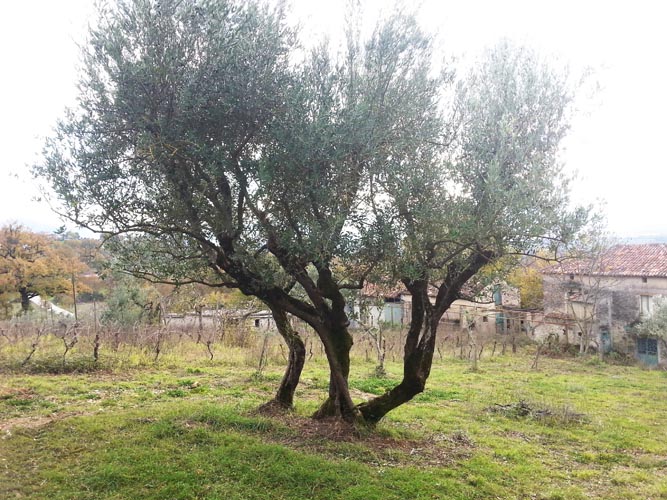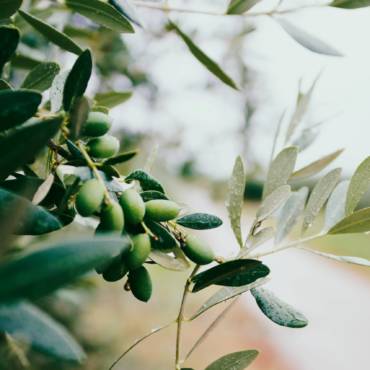

In the olive grove, among the various cultivars present , I found about eighty plants, of the variety that the old farmers call “Romanelle”. The Romanelle were introduced into Italy by the Phocaeans, Greek colonists who settled in the Picentino mountains, east of Salerno. Like most of the Campanian populations, the Phocaeans allied themselves with Hannibal against the Romans. After the battle of Zama and the complete destruction of Carthage, the Romans resolved the issue with those who had rebelled in their own way and came to destroy the settlements of these populations. The survivors moved to the then Lucania, bringing their habits with them. This variety of olive tree in the Vallo di Diano is found only in Padula and a few other isolated individuals in other towns. The cultivation of these plants has been abandoned because they were considered unproductive and in truth they are ugly to look at, because they easily show dry twigs, they easily become covered with sooty mold, the fruit is small and ripens late, forcing one to work in December-January with the biting cold of our area. But the oil they produce is excellent: these are plants that resist frost very well, their appearance is due to their rusticity, like all the “ugly but good” plants. The fact that they ripen late is only an advantage: in September, when the olive fly (the number one enemy of olives) attacks the olives, it finds a hard fruit that it cannot penetrate. In 2015, a terrible year for Italian olives decimated by the olive fly, I regularly harvested these fruits while I had to give up the entire production of the others. To destroy the sooty mold I learned to prune them a lot, making sure the sun and air, which they are extremely fond of, reach everywhere. With the help of an important nurseryman, Pacini di Pescia (PT), I managed to obtain virus-free cuttings with certified DNA, so as to produce the oil of the colonists of Magna Graecia in monocultivar.